The first version of the routine had too many screens: sleep score, steps, heart rate, notifications, and a wrist check before breakfast. It felt like a test that had to be passed. The calmer version began with one question: what information would actually change today?
Reduce the sequence
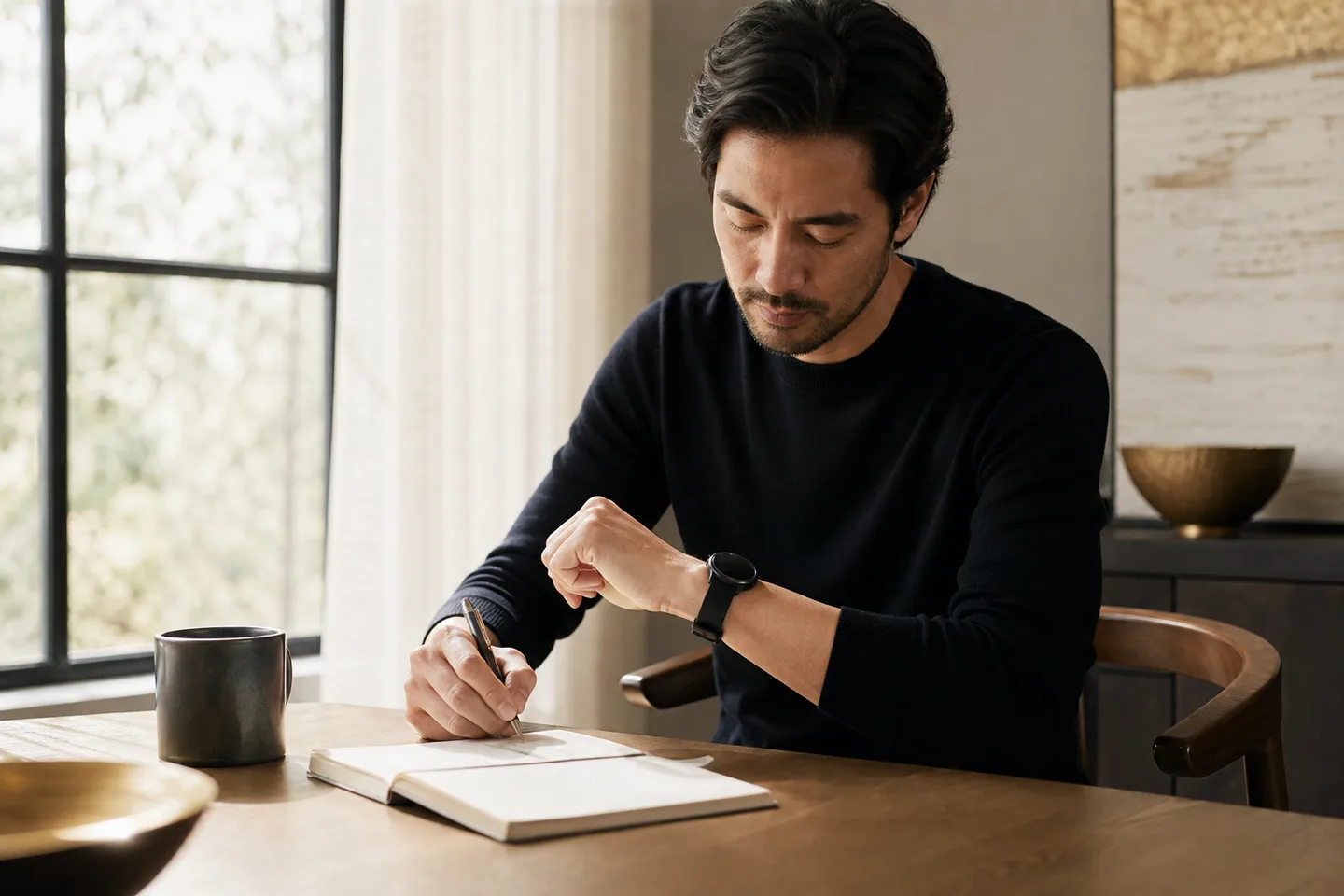
The watch charged during dinner. In the morning, the wearer sat down, noticed how they felt, checked the fit, and completed one supported wellness check. A note was added only when the context was unusual. The app stayed closed until the weekly review.
Keep the boundary visible
The routine did not attempt to diagnose anything or replace a conventional measurement requested by a healthcare professional. Symptoms and medical questions remained separate from the wearable workflow.
The practical lesson
A product becomes more useful when it removes friction. Choose a device and routine you can repeat calmly. Compare W9S, E8, and R7, then use the Health Center to learn the technique and limits for the feature you choose.
0 comments